Research Paper
Removal of Copper and Lead Ions from Water Using Dopamine-Modified Waste Marine Plastic
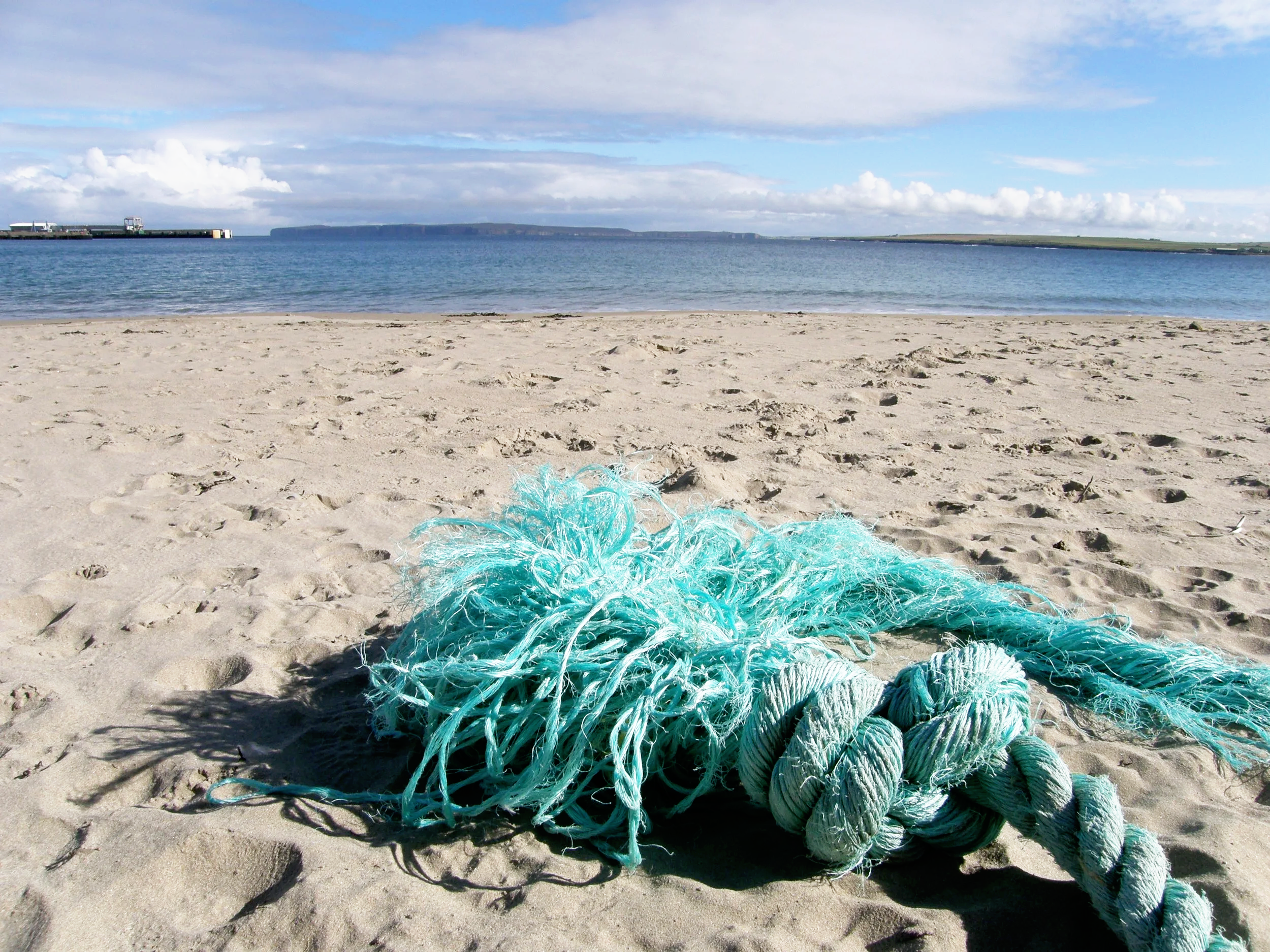
A new paper led by Dr Huiyi Zhang, completed as part of his PhD at the Environmental Research Institute (ERI), shows that discarded polypropylene (PP) fishing ropes collected from beaches can be upcycled into effective adsorbent materials for removing toxic metals from water. The article, “Removal of Copper and Lead Ions from Water Using Dopamine-Modified Waste Marine Plastic”, is published in Environmental Processes and co-authored by Prof. Stuart Gibb, Dr Neil James, Dr Kenneth Boyd and Dr Sabolc Pap.
The team demonstrate that waste PP ropes, after mild polydopamine (dopamine-based) surface modification, act as low-cost sorbents capable of capturing dissolved copper (Cu²⁺) and lead (Pb²⁺) from aqueous solutions. The dopamine treatment introduces functional groups that enhance electrostatic attraction and chelation, more than doubling metal uptake compared with untreated plastic, and column experiments show that combining the modified plastic with activated carbon can significantly extend the operational lifespan of packed-bed treatment systems.
Abandoned and lost fishing gear and rope-like plastics are a major component of marine litter. Repurposing these materials into functional sorbents aligns closely with circular economy goals, keeping resources in use for longer, reducing pollution, and lowering demand for virgin materials, while also providing a practical route to lower-cost wastewater treatment.
Read the full paper here: Removal of Copper and Lead Ions from Water Using Dopamine-Modified Waste Marine Plastic