Research Paper
Metal association and bioaccessibility in rope-derived fibrous microplastics
Researchers at the Environmental Research Institute (ERI) have published new research examining how microplastic fibres from discarded ropes can carry and release metals in the environment. The study provides new insight into the risks of heavy metals associated with microplastic pollution in remote coastal regions of northern Scotland.
The paper, “Metal association and bioaccessibility in rope-derived fibrous microplastics from remote coastal environments of Northern Scotland,” was led by Florian Meyer, involved ERI researchers Dr Neil James and Dr Sabolc Pap, and has been published in the journal Marine Environmental Research (Volume 217, 2026).
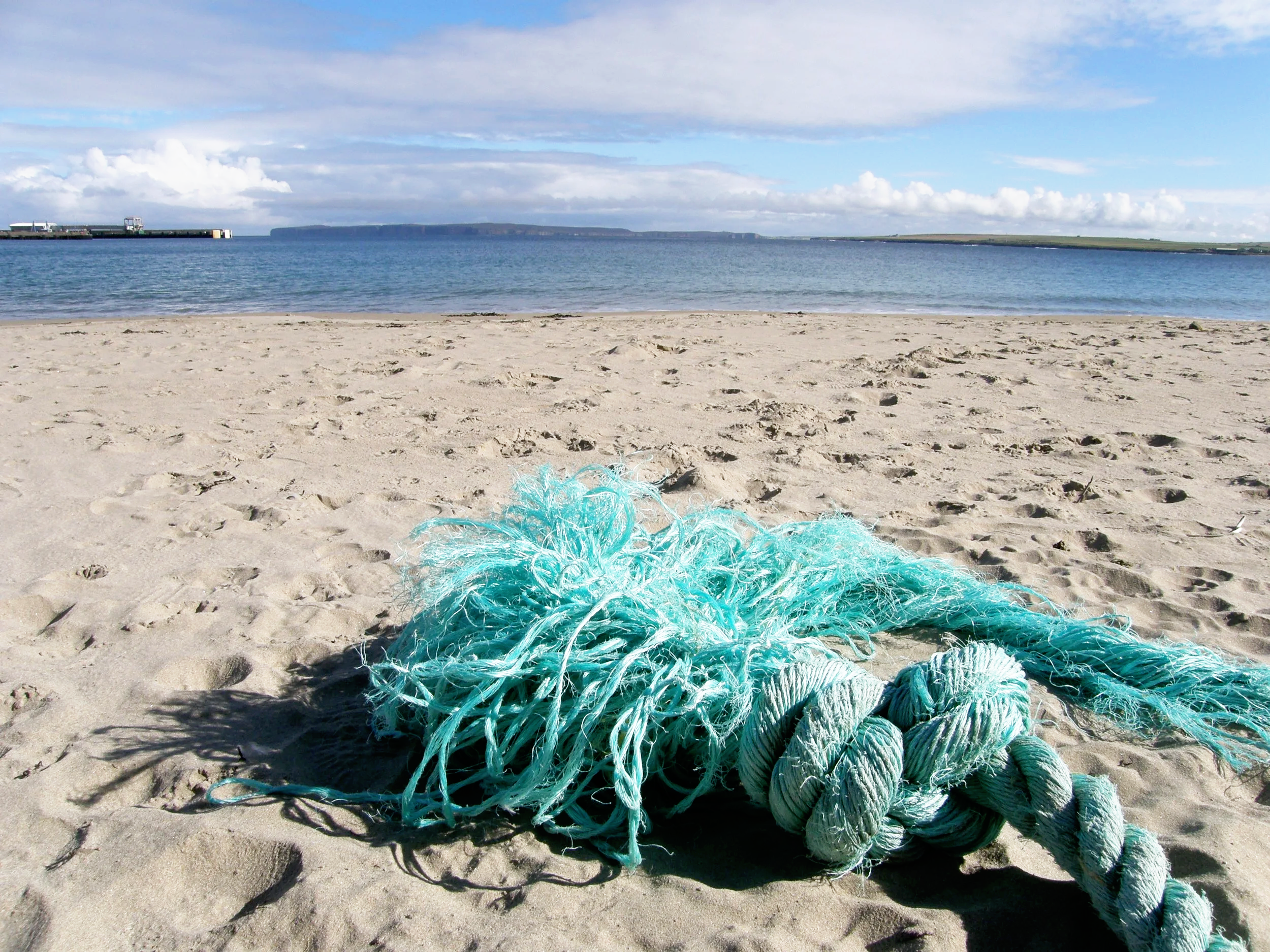
Microplastic pollution is now recognised as a widespread environmental issue, even in remote areas with relatively low direct human impact. In addition to their physical presence in marine ecosystems, microplastics can also act as carriers for metals, either absorbed from the surrounding environment or incorporated during manufacturing through pigments and additives. This new study focused on fibrous microplastics derived from synthetic ropes, which were identified as a dominant source of plastic fibres found on beaches in northern Scotland.
Researchers collected microplastic fibres from 24 sandy beach sites across the northern mainland of Scotland and the Orkney Islands. The team analysed both beach-collected rope fragments and virgin rope materials to investigate how metals are associated with these plastics and how readily they may become biologically available.
Using Fourier-transform infrared spectroscopy (FTIR) and scanning electron microscopy (SEM), the researchers characterised the plastic polymers and assessed how environmental weathering affects the material. The study found that polypropylene was the most common polymer type, followed by polyethylene, reflecting typical materials used in fishing ropes. It was also shown that weathered rope fibres showed signs of surface oxidation and structural degradation, suggesting that environmental exposure increases their ability to bind metals.
The team examined how metals associated with these fibres might become bioaccessible, meaning potentially available for uptake by organisms. Sequential extraction techniques showed that manganese (Mn) had the highest bioaccessible fraction, followed by lead (Pb) and zinc (Zn). Additional metals were identified through digestion methods, indicating that some metal contamination originated from pigments and additives used during plastic manufacture, as well as from environmental sources.
The findings provide a regional-scale assessment of how rope-derived fibrous microplastics interact with metals in coastal environments. This helps improve understanding of the chemical dimension of microplastic pollution, particularly in remote coastal areas where pollution sources may be less obvious but still significant. The work was carried out at ERI in Thurso and forms part of ongoing research at the institute investigating marine pollution, plastics, and coastal environmental health.
Read the full paper: